
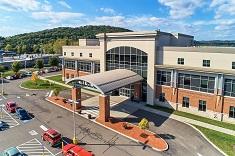


UHS is pleased to announce its continued collaboration with the Central New York Regional Center for Tobacco Health Systems at St. Joseph's Health. Through this partnership, UHS has strengthened its tobacco-dependence treatment policy, aligning it with the Public Health Service Clinical Practice Guidelines.
The CNY Regional Center for Tobacco Health Systems at St. Joseph’s has provides training on evidence-based strategies for treating tobacco use and dependence. These training courses cover topics such as addiction, emerging nicotine products, cessation medications, utilizing the 5A’s approach (ask, advise, assess, assist, and arrange), and helping patients develop comprehensive quit plans.

Through funding from St. Joseph’s, Respiratory Therapy Navigator Kate DiPietro, BS, RRT, UHS Population Health and Care Coordination, became a certified Tobacco Treatment Specialist (TTS). With Ms. DiPietro’s advanced training, UHS now offers more comprehensive smoking‑cessation support to the community, helping patients through evidence‑based strategies and personalized counseling.
The center’s technical assistance has also enabled UHS to fully implement the identified enhancements and strengthen our ability to assist individuals who are ready to quit. This work affirms UHS’ commitment to best‑practice tobacco‑dependence treatment.
Tobacco use remains the leading cause of preventable death and disease in the United States. In New York State alone, smoking causes over 28,000 deaths annually and contributes to chronic illness for approximately 750,000 adults.
UHS recognizes that many individuals who smoke or use electronic cigarette products want to quit, although quitting can be challenging. With the right support, smokers can significantly improve their chances of success. Quitting smoking can yield profound benefits for both immediate and long-term health, even for heavy and lifelong smokers. When individuals collaborate with their healthcare providers, long-term quit rates significantly increase.
The American Cancer Society recommends yearly lung cancer screenings for those at higher risk, including current and former smokers.
To request a lung screening appointment, click here.