

World Stroke Day, observed annually on October 29, is a reminder that every second counts when it comes to stroke recognition and treatment. To learn more about how to recognize the warning signs of stroke, click here.
While rapid emergency care can save lives and reduce disability, recovery doesn't end when a patient leaves the hospital.
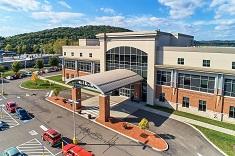
At UHS, patients have access to comprehensive stroke care close to home, from emergency treatment through rehabilitation to recovery. As the first program in the region to earn the Joint Commission’s Gold Seal of Approval for Comprehensive Stroke Center Certification, the UHS Stroke Center at UHS Wilson Medical Center provides best-in-class, patient-centered stroke care using the latest diagnostic and therapeutic advancements.
One of those advanced therapies is Vivistim, a breakthrough treatment that helps eligible stroke survivors regain hand and arm function. Vivistim is the first FDA-approved neurostimulation device that pairs vagus nerve stimulation with rehabilitation therapy and daily activities, helping strengthen brain connections that support movement and recovery.
Fifteen years after a stroke changed her life, UHS patient Sharon Geist has found renewed hope and motivation through Vivistim.
A renewed outlook: Sharon Geist’s journey with Vivistim
Sharon Geist experienced a stroke on March 4, 2011, leaving her with limited function on the right side of her body. While she completed physical therapy and rehabilitation over the years, she still found that she struggled to do many simple, day-to-day tasks.
In November of 2025, Ms. Geist came to the hospital believing she might be experiencing another stroke. Fortunately, it was a false alarm. However, during her hospital stay, a UHS physical therapist introduced her to Vivistim, a recommendation that would be life-changing.
Ms. Geist learned she might be a good candidate for Vivistim. “That really turned my world right upside again, because after 15 years, I decided that this was my life,” Ms. Geist said, sharing that the limited mobility in her right side resulting from her stroke had become her new reality. “It made me feel so good to know there is still hope for people like me even after so many years.”
While she had some hesitance having not heard of the procedure before, Ms. Geist decided to go through with it after consulting with several doctors and reading testimonials from other patients online. After a few months of completing occupational therapy at UHS Binghamton General Hospital, she had the Vivistim device implanted at UHS Wilson Medical Center on June 3, 2026.
Ms. Geist shared that she was impressed with the procedure itself, experiencing minimal side effects and little discomfort.
Almost immediately, she began to notice improvements. Everyday tasks and household chores became easier than they had been in 15 years. Whether cleaning around the house or using a fork and knife to eat, she found a renewed sense of confidence and independence.
“Without thinking about it, I find myself using my right hand. For 15 years before, I hadn’t really used it,” Ms. Geist shared. “I can reach up to open a cabinet and grab a coffee mug. Little milestones like that might not sound like a big deal, but they are.”
Beyond the physical benefits of Vivistim, Ms. Geist also spoke to the profound impact it has had raising her spirits and inspiring her to have a more positive outlook. “I feel the best I’ve had in quite some time,” she said. “I wasn’t quite so happy before, because I felt very frustrated by my limitations following my stroke. I don’t like people telling me I can’t do things. Now, I say, ‘I can and I will.’”
Once Vivistim has been implanted, it can be activated by a therapist in a rehabilitation setting during functional, movement-based therapy, and the patient can activate it at home or on the go by swiping a magnet. Once swiped, it runs for about thirty minutes, and it can be swiped up to eight times per day.
For Ms. Geist, swiping the magnet has become a routine part of her day, starting when she gets out of bed in the morning. Throughout the day, she activates the Vivistim in anticipation of any number of tasks, such as doing the dishes, cooking, cleaning the yard or even going for a walk.
“If you’re going to be doing an activity, no matter how simple, use it,” she said. “That signal is going to your brain, and it’s re-teaching your brain this movement.” Ms. Geist also shared that her grandchildren have gotten involved in her recovery, playing little games to help with her fine motor skills and even reminding her when she needs to swipe the magnet.
The support of her family has played an important role in her recovery. Whether offering encouragement, helping her stay motivated or celebrating milestones along the way, they have been with her every step of the journey. “Everyone has days when they’re feeling a little down. My family always keeps me going,” she said.
That support system also includes the providers and caregivers who have been by her side throughout the recovery. From the care she received at the UHS Stroke Center to her occupational therapy, Ms. Geist experienced kindness, patience and understanding from every member of the UHS care team.
“Everybody has gone above and beyond. They truly want to see success. They want patients to set goals and see us reach our goals,” she said. “I could not ask for a better team caring for and supporting me. UHS is the only place I’ll go.”
UHS is proud to be the only provider of this state-of-the-art stroke treatment in the region. Having access to Vivistim close to home made a world of difference for Ms. Geist, allowing her to receive innovative care without traveling far from family and support.
“I wouldn’t have been able to travel somewhere else to have this procedure,” she said. “It was music to my ears when I heard it was available right where I live.”
Looking ahead, Ms. Geist continues to set goals for her recovery, as she hopes to be able to help her husband with more tasks around the house and even work toward having a part-time job. “I couldn’t be happier with the results so far, and I know I’m only going to keep seeing improvements and getting better,” she said.
Ms. Geist hopes her experience is just one of many success stories and encourages other eligible stroke survivors to explore this breakthrough therapy. “I hope any stroke patient who has the opportunity to get the Vivistim implant does. I would recommend it to anyone,” she said.
Vivistim is the only system of its kind, and has been proven safe and effective. If you are a chronic ischemic stroke survivor and have not regained arm and hand function six months after your stroke, this treatment may be right for you.
To learn more about Vivistim Therapy for stroke recovery at UHS, click here.