

October is Breast Cancer Awareness Month, an annual campaign dedicated to education about the prevalence of breast cancer, the importance of regular mammograms, the benefits of early detection, and the lasting impact a breast cancer diagnosis can have on individuals and their families. Breast cancer is one of the most commonly diagnosed cancers among women in the United States, accounting for approximately 30% of all new cancer diagnoses in women each year.
This October, UHS reminds you of the importance of early detection. For one breast cancer patient, a routine mammogram made all the difference.
The importance of timely screening
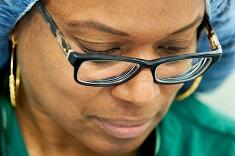
For Jes Huggins, missing a yearly mammogram seemed like a minor delay. But when her provider encouraged her to get back on schedule, that routine screening led to a breast cancer diagnosis — and a treatment plan that moved quickly from detection to surgery and recovery.
Ms. Huggins, 45, of Binghamton, said she had previously known about a cyst in her breast. When she went for her mammogram and subsequent ultrasound, however, something was different, and additional imaging and a biopsy followed.
“I ended up getting another mammogram and a biopsy. When the biopsy came back, they confirmed it was cancer,” Ms. Huggins said.
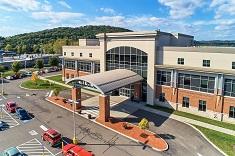
An effective, timely treatment plan developed quickly, centered on Ms. Huggins’ unique needs. After receiving her diagnosis in May, Ms. Huggins underwent a mastectomy on June 2 at UHS Wilson Medical Center. She recalled being told her cancer was in an early stage and, following surgery, she did not need chemotherapy or radiation.
For Ms. Huggins, the experience underscored the value of screening. “Early detection is definitely key,” she said.
That message is one Therese Federowicz, MD, breast surgeon, UHS, also emphasizes. Dr. Federowicz joined the UHS Breast Center in May 2026 and treats patients across the spectrum of breast disease, including benign conditions, high-risk or precancerous lesions and breast cancer.
Patients may come to the Breast Center after feeling a change themselves or because imaging has identified an abnormality. What happens next depends on the imaging findings, pathology and each patient’s individual circumstances.
Improved screening
According to Dr. Federowicz, advancements in breast imaging are helping specialists detect subtle changes sooner.
“Mammography has advanced significantly with three-dimensional technology,” Dr. Federowicz said. “We are able to identify subtle changes that may have gone undetected in the past, leading to cancers being found at much earlier stages.”
Early detection can often provide patients with more treatment options. Dr. Federowicz explained breast cancer treatment today is highly individualized rather than based on a single approach for every patient.
When a patient receives a diagnosis, she reviews the pathology and imaging in detail and discusses the available surgical choices. Depending on the cancer and the patient, those choices may include lumpectomy or mastectomy. A patient undergoing mastectomy may also have options involving reconstruction.
“There’s more than one path to long-term, disease-free survival,” Dr. Federowicz said. Her role, she explained, is to help patients understand those options and determine which approach leads to the ideal possible clinical outcome and best suits the patient’s preferences.
“We have to look at the details. We have to look at the biology. We have to look at the genetics, and then at the end of the day, the patient has to be comfortable with the treatment moving forward,” she said.
The extra mile
Ms. Huggins appreciated that thorough approach. She worked with Dr. Federowicz after her diagnosis and said the surgeon carefully walked her through her care.
“She’s fantastic,” Ms. Huggins said. “She’s super thorough and if I had any questions, I could just reach out to the Breast Center and get the answers I needed.”
Care at UHS extends well beyond surgery. Patients diagnosed with breast cancer may meet with nurse navigator Debbie Sweeney, who helps coordinate care and connects patients with other members of the treatment team.
Additional resources can include oncology social workers, nutritionists, chaplains and community programs that help with practical concerns such as transportation and financial needs. The goal is to prevent outside challenges from becoming barriers to necessary cancer treatment.
Follow-up is another important component. UHS nurse practitioners help monitor patients after breast cancer treatment, providing ongoing breast examinations and checking their overall health as part of survivorship care.
Just as important was the support waiting for her outside the hospital. Weeks after her surgery, Ms. Huggins was back to work as a bartender and returning to her regular routine. Her coworkers, supervisor, patrons and family all helped during her diagnosis, surgery and recovery. “It was a little bump,” she said. “I had a really good support system.”
Take time for you
Today, Ms. Huggins is feeling well and looking ahead to her next follow-up appointment. Her experience also carries an important message for other women who may be tempted to postpone screening.
Dr. Federowicz stresses that breast cancer risk is not limited to women with a strong family history or other obvious risk factors. Understanding personal risk can help women and their healthcare providers determine when screening should begin and whether additional screening may be appropriate.
She also encourages women to pay attention to changes in their breast health and seek medical advice when something doesn't seem right. “If you’re noticing something new, if you’re seeing or feeling something, don’t assume it’s nothing,” Dr. Federowicz said. “Bring it to the attention of your provider.”
For Ms. Huggins, getting back on track after missing one mammogram made all the difference. Early detection led to prompt treatment and the best possible outcome.
Screening Time
Talk with your provider about the mammogram screening schedule that’s right for you. If you have any concerns about your breast health or would like to learn more about breast cancer screening and treatment, visit nyuhs.org.